

Remote Bookkeeping: The Future of Accounting for Modern Businesses
Business has changed. Work is no longer tied to a physical office, paper files or a filing cabinet full of invoices. Today, financial records can be captured, processed and reported securely from anywhere in the world.
This is where remote bookkeeping comes in.
Remote bookkeeping allows a qualified bookkeeper to manage your financial records online using secure, cloud-based systems, giving business owners real-time financial information without the cost of a full-time in-house accounts department.
For small and medium businesses in South Africa, this model is becoming not only convenient but essential.
What is Remote Bookkeeping?
Remote bookkeeping is the process of recording, organizing and maintaining a company’s accounting records using online accounting software rather than working on-site.
Instead of delivering paperwork to an office, businesses simply upload or email documents such as:
- Invoices
- Receipts
- Bank statements
- Payroll information
The bookkeeper then processes the records using secure, cloud software and provides reports electronically.
Why Businesses Are Moving To Remote Bookkeeping
- Lower Costs
Traditional bookkeeping requires office space, equipment and employee overheads. Remote bookkeeping removes these expenses. You only pay for the service you need.
2. Real-Time Financial Information
Cloud accounting allows business owners to see:
- Profit and loss
- Cash flow
- Outstanding debtors
- Expenses
At anytime, not months later.
3. Improved Compliance
Tax regulations in South Africa require accurate and up-to-date records. Remote bookkeepers help businesses stay compliant with:
- VAT submissions
- PAYE and UIF reporting
- SARS record-keeping requirements
4. Secure Document Storage
Documents are stored digitally and backed up automatically. No more lost receipts or damaged files.
5. Access to Expertise
Instead of hiring a junior clerk, businesses gain access to trained accounting professionals who understand financial controls and reporting.
How Technology Makes Remote Bookkeeping Possible
Modern bookkeeping uses a combination of:
- Cloud accounting software
- Bank feed integrations
- Automated transaction matching
- Secure document sharing
- AI-assisted data capture
These tools reduce manual work and improve accuracy while allowing the bookkeeper to focus on reviewing and advising rather than typing data.
Is Remote Bookkeeping Safe?
Yes, in many cases it is safer than traditional paper systems.
Security features include:
- Encrypted connections
- User access controls
- Activity logs
- Automatic backups
Paper files can be lost, stolen or destroyed. Cloud records remain protected and recoverable.
Which Businesses Benefit Most?
Remote bookkeeping is ideal for:
- Startups
- Freelancers
- Contractors
- Professional practices
- Retail and services
- Growing SMEs
If your business operates digitally, your bookkeeping should too.
The Role of the Modern Bookkeeper
Today’s bookkeeper is no longer just a data capturer.
By using automation tools, the bookkeeper becomes:
- A financial organizer
- A compliance assistant
- A reporting specialist
- A business support partner
Instead of preparing history, we help business owners understand their numbers and make better decisions.
Remote bookkeeping is not a temporary trend, it is the natural evolution of accounting services.
It reduces cost, improves accuracy, enhances compliance and gives business owners immediate financial clarity
Businesses that adopt digital financial management early gain a major advantage: they understand their finances before problems arise.
If you want organized records, reliable reporting and peace of mind, remote bookkeeping is the modern solution.
Connected. Compliant. Confidently Remote.
Taxes that contribute to the South African Fiscus
It is evident that those who brave the traffic and eagerly await Friday’s are the heroes of the tax community.
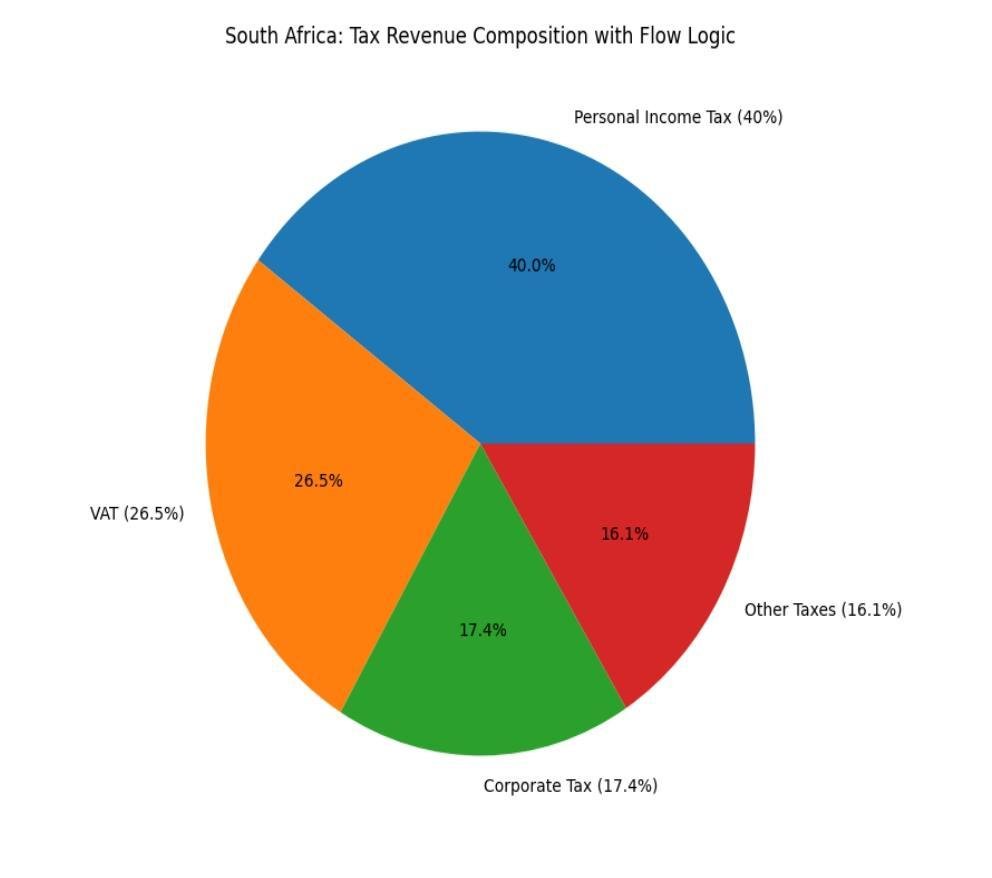
The major sources of tax revenue contributing to the Tax Cookie Jar
- Personal Income Tax (PIT) – 40%
- Value Added Tax (VAT) – 26.5%
- Corporate Income Tax (CIT) – 17.4%
- Other Taxes – 16.1%
Will the sources of tax revenue change in the future?
According to trusted sources, the mix of tax revenue sources for the South African fiscus is likely to change over time. The core pillars, personal income tax, value added tax and corporate tax will be dominant with small changes.
The change will be gradual, driven by:
- Economic change
- Technological changes
- Demographic and Political changes
- Global trends
The article presented in this edition is an introduction to Taxes and Accounting. We plan to write daily articles on Tax and Accounting as they are closely related to each other.
If we consider the drivers of change , we will explain each in detail and request your input related to the above mentioned.
Accounting has been transformed by technology, the bookkeepers function has changed from a number cruncher to a financial specialist. Understanding the impact of tax enforcement and the ethics in accounting is of the utmost importance.
Let’s discuss and introduce the four points that will contribute to the differing changes in tax in future.
Economic
South Africa is dependent on personal income tax (PIT) but why is this risky?
- The tax base is narrow (few high earners pay most PIT)
- High unemployment will reduce PIT growth
The future plan will seek broader consumption taxes (VAT) or devise new taxes.
Technological Changes
SARS is using AI and Data Analytics to improve compliance.
- Closing tax gaps
- Reducing evasion
- Expending compliance
